ECommerce marketing is a traditional marketing but its for products and services sold online. Their target is to convert browsing, potential consumers into loyal customers, taking them into each stage of the funnel until purchase. Instead of purchasing from store they can directing them into our websites to convert online.
Effective ecommerce marketing strategies can significantly enhance visibility and drive sales. By leveraging various channels, businesses can engage their audience and improve conversion rates, making ecommerce marketing essential for success.
eCommerce is not technically a part of marketing, but the two concepts depend on each other.
- eCommerce is basically selling products and services online, through websites or through apps.
- Marketing whether if online or offline is the concept of driving sales of those products or services through omnichannel campaigns and strategies.
Content and SEO
A Long-Term Plan That Really Works Content marketing and SEO are a team. They help people find your store without you having to pay for each visitor. When you write articles, people who are just starting to look for something will find your store. Your store will be seen as a place to get information about things. If you have information about your products, people who are comparing things will choose your store.
They will think your products are good because you have information about them. When customers talk about their experiences it helps other people feel good about buying from your store. They will see that you sell things and that you are a store. To make this work you need to do some things.
Integrating SEO into your ecommerce marketing plan is vital. It ensures your products reach potential customers actively searching for them online. Optimized content is key to making your ecommerce marketing efforts effective.
Utilizing social media in ecommerce marketing can enhance brand awareness and foster customer relationships. Engaging content tailored for social platforms will attract consumers and encourage them to explore your offerings.
* Make sure the pages about your products have titles that make sense and descriptions that are easy to understand. You should also add some code to help search engines know what you are saying. This code is called SEO. It helps search engines understand your products.
* Create things to read that answer peoples questions. This will make your store more helpful to people who are looking for information. * Make sure your website works well on phones. This helps Google think you are a store.
* Get links, from websites. You can do this by working with them or talking to the press. This will make your store well known. Help people find you when they search for things online.
Ultimately, establishing a seamless customer journey through ecommerce marketing can enhance user experience. Personalizing interactions will foster loyalty and encourage repeat purchases.
Paid Research and Social
In addition, utilizing data analytics in ecommerce marketing allows businesses to refine their strategies based on consumer behavior. This analytical approach can result in more targeted campaigns and improved ROI.
Integrating email campaigns into your ecommerce marketing strategy is another effective way to communicate with your customers. Newsletters featuring product updates and promotions can drive traffic and sales.
Paid search and social are channels that help you reach people. These channels bring in traffic. Help you target the people you want to reach. They are useful for testing your offers and capturing people who’re really interested in what you have. The basics of paid search and social have not changed much.
To have a paid search and social campaign you still need to do research on the keywords people use create ads that grab peoples attention organize your account well and keep making adjustments to get the return on what you spend. What has changed is that now a lot of this work can be automated. Paid search and social are channels that help you reach people and target the people you want to reach.
When you connect your paid search and social campaigns to a system that shows you a view of your customer you can do more. You can stop showing ads to people who have already bought from you show ads to people who left things in their cart and use the information you have about your customers to make decisions about who to show your ads to. Paid search and social are channels that help you reach people.
Social Commerce
Social commerce is also important. Social platforms are not just for getting peoples attention at the beginning of the process. Now people can discover, consider and buy things all in one place on platforms like TikTok Shop, Instagram Shopping and Facebook Shops. People, people like to use videos to research products before they buy.
Investing in technology that supports your ecommerce marketing initiatives can streamline operations and enhance customer service. Automation tools can save time and improve efficiency.
Paid search and social are channels that help you reach people and target the people you want to reach. Peoples attention on platforms is short. It can be fleeting. It can get your brand noticed. It does not usually build loyalty on its own. If you want to turn peoples interest on platforms into long-term customer relationships you need to capture their interest and use it to start a conversation with them across email, mobile and other channels you own. Paid search and social are channels that help you reach people and target the people you want to reach.
Email and Mobile
Email is also very important. Email is still the way customers prefer to hear from brands. It works better than SMS push notifications and social platforms and it is one of the ways for marketers to get a return on what they spend long as you use it to have a conversation with people rather than just sending them messages.
Email is a channel that helps you build relationships with your customers.What makes email programs successful today is that they use automation and real customer data. Of just sending out messages to everyone you can use triggers based on how people behave. You can also segment your customers in ways than just what stage they are at in their relationship with your brand.
You can use intelligence to decide when to send messages which’s something that people used to have to guess at. Email is a channel that helps you build relationships with your customers. Mobile is also a channel for customers to show their loyalty. Apps can help people buy more give you information about your customers and help you keep customers for longer. You have to use mobile as part of a strategy not on its own. Mobile is a channel that helps you build relationships with your customers.
Ominichannel Strategy
Omnichannel marketing is what makes all these channels work together. People do not see your channels one by one so you should not manage them that way. For example someone might find you on TikTok then sign up for your email list get a message on their phone later and finally buy something from your app. If all these things do not work together the experience will not be good.
Lastly, reviewing and adjusting your ecommerce marketing tactics regularly ensures they align with evolving consumer needs and market trends. Flexibility in approach can lead to sustained success.
Omnichannel marketing is what makes all these channels work together. That is why omnichannel marketing is very important now. Omnichannel marketing connects all your channels so every message you send is based on what happened. When companies do this well customers start to trust that the company really knows them. Things like paid search and social media and email and mobile phones all work together to help you build relationships with your customers.
Paid search and social media are ways to reach people and target the people you want to reach. Omnichannel marketing helps you build relationships with your customers by using all these channels. Omnichannel marketing is, about using all these channels to talk to your customers and understand what they want.
Business-To-Consumer(B2C)
B2C e-commerce is the well-known e-commerce model. It is where businesses sell products or services directly to consumers through their online stores. For example online retailers like Target and Walmart do this. Companies like Warby Parker, which sell directly to consumers are also part of this. Even digital service providers, such as meal kit subscription companies are B2C e-commerce. The focus of B2C e-commerce is on making the users experience great. It also focuses on building a connection with the brand. B2C e-commerce aims to make buying easy and quick. This model is, about the B2C e-commerce
Business-To-Business(B2B)
B2B is about businesses selling to businesses not to individual customers. In this model the orders are usually bigger. The sales process takes longer. There are people involved in making a decision. For example companies that sell products in bulk, like suppliers are B2B. Software companies like Salesforce that sell to other businesses are also B2B. Industrial equipment manufacturers that sell to other businesses are B2B too. B2B e-commerce platforms focus on things like pricing for orders, managing customer accounts and working with procurement systems used by businesses. B2B transactions happen between businesses. B2B sales are different, from selling to consumers.
Customer-To-Customer(C2C)
C2C enables individuals to sell products or services directly to other consumers through third-party platforms that facilitate transactions. eBay pioneered this model, while platforms like Poshmark, Mercari, and Facebook Marketplace have expanded C2C opportunities across various product categories. These platforms generate revenue through listing fees, transaction commissions, or premium features while connecting buyers with sellers.
The synergy of well-executed ecommerce marketing strategies can lead to heightened brand recognition and increased sales. Regular analysis and adaptation will enhance effectiveness.
Customer-To-Business(C2B)
People are doing something with marketing it is called C2B marketing. This is where regular people like you and me sell things to companies. For example there are websites like Shutterstock where photographers sell their pictures to businesses. C2B marketing also includes things, like influencer marketing, where people help companies promote their products.. There are websites where people can sell their skills to companies like freelance marketplaces. C2B marketing is getting really popular with all the people working on their own and creating things. C2B marketing is really growing because of the way people are working now with the gig economy and the creator economy and C2B marketing is a part of that.

The 5’s Of Ecommerce Marketing Strategy
Customer in ecommerce marketing
This is the base of all shopping marketing. To do this right you need to know your target customers well. You have to understand who they are, what they like, how they act online what problems they have and why they buy things. When you know all this you can show them the ads and messages. Good online shopping companies spend a lot of time and money learning about their customers making buyer profiles and studying how they behave.
This means giving them support and treating them well so they become loyal fans of your brand and buy from you again. Customer is really important for all shopping marketing efforts. Successful online shopping brands, like Amazon and others focus on customer to make their marketing work.
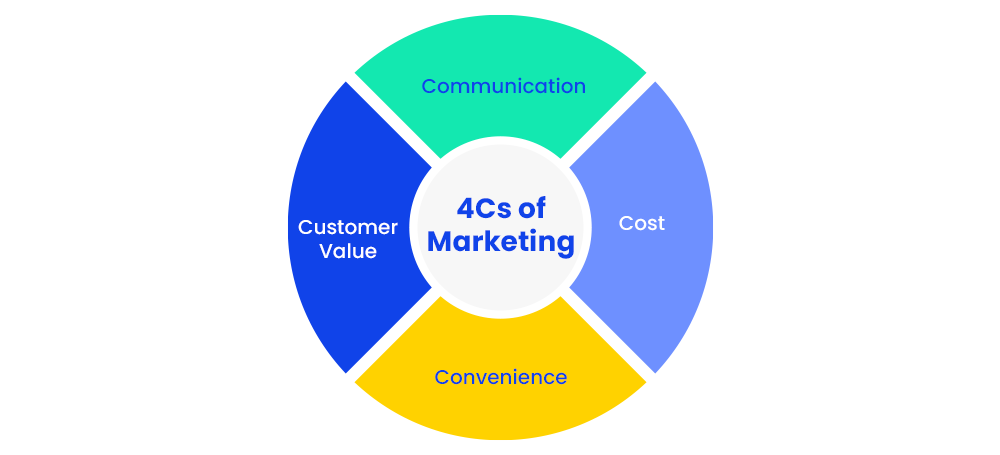
Cost in ecommerce marketing
The cost is something that affects how much we charge our customers and how much it costs us to run the business. We need to make sure our prices are good enough to attract people who are looking for deals when they shop online. At the time we have to make sure we are making enough money to keep the business going and to grow. Our cost strategy is about being open with our customers about how much things cost. We also try to give them deals sometimes and let them know what they are getting for their money.
This helps our customers understand why things cost what they do and feel okay about paying those prices. The cost of shipping what happens when people want to return things and how they can pay for things are all really important, to our customers. These things can make a difference in whether or not people decide to buy something from us and whether or not they get frustrated and leave their shopping carts behind.
Ultimately, your ecommerce marketing strategy should focus on creating value for customers. By solving their problems and meeting their needs, your business can thrive in a competitive landscape.
Convenience in ecommerce marketing
The cost is something that affects how much we charge our customers and how much it costs us to run the business. We need to make sure our prices are good enough to attract people who are looking for deals when they shop online. At the time we have to make sure we are making enough money to keep the business going and to grow. Our cost strategy is about being open with our customers about how much things cost. We also try to give them deals sometimes and let them know what they are getting for their money.
This helps our customers understand why things cost what they do and feel okay about paying those prices. The cost of shipping what happens when people want to return things and how they can pay for things are all really important, to our customers. These things can make a difference in whether or not people decide to buy something from us and whether or not they get frustrated and leave their shopping carts behind.
Communication in ecommerce marketing
When brands talk to customers they need to say things that teach them something and also make them want to buy something. They also need to send messages that say things like “we got your order” or “your stuff is on the way”.. When customers have problems brands need to help them fix those problems and answer their questions. Brands also like to use things like Facebook and Twitter to talk to customers and make friends with them not sell them stuff. They do this by posting things that’re interesting and fun to read.
If brands know a lot about their customers like what they like and what they do they can talk to them in a way that feels more personal. This makes customers more likely to listen and actually do something like buy something. Communication like this is really good, at getting customers to engage with brands and actually buy things.
Channel Section in ecommerce marketing
Channel selection is really important. This is the step that decides how and where brands talk to the people they want to sell to. They use different ways to do this. Some ways are things the brand owns, like their website and list of email addresses.
They also think about things they can get for free like when people find them on search engines or tell their friends about the brand.. Then there are things they have to pay for like ads on search engines and promotions on social media. The thing is people usually see a brand times before they buy something. So brands need to be, on lots of platforms and make sure they are saying the same thing every time so it all makes sense to the customer.
In the end, success online comes from connecting everything around the customer. Good content and SEO help people find your store. Paid ads bring the right visitors. Email and mobile help you stay in touch and build trust. When all these work together, customers get a smooth and easy experience from start to finish.
Ecommerce marketing is not just about getting people to your website. It is about helping them, answering their questions, and making them feel confident to buy. When you keep improving your strategy and focus on what your customers need, your business can grow. A strong ecommerce marketing plan helps you get more sales and keep customers coming back.